Fermentation, a process as ancient as human civilization, is the alchemical transformation of simple ingredients into complex flavors and textures, powering everything from our daily bread to craft beers and probiotic-rich foods. At its heart lies the tireless work of microscopic organisms – yeasts and bacteria – converting sugars into alcohol, acids, and gases. While often seen as a simple, natural process, its success hinges on one profoundly critical, yet often overlooked, factor: temperature stability. Any significant temperature fluctuation can stress these microbial workers, leading to compromised flavors, stalled processes, or even total fermentation failure.
The Delicate Balance: Understanding Fermentation and Temperature
Fermentation is a metabolic process driven by enzymes within microorganisms. These enzymes are highly sensitive to their environment, and temperature is arguably the most influential variable. Every strain of yeast or bacteria has an optimal temperature range where its enzymes function most efficiently, leading to predictable and desirable outcomes. Outside this “sweet spot,” their activity either accelerates wildly or grinds to a halt, fundamentally altering the chemistry of the ferment.
The goal in any fermentation is to encourage the desired microorganisms to thrive, converting specific compounds while inhibiting undesirable ones. This intricate dance requires a consistent environment. Think of it like a finely tuned engine: small adjustments are necessary, but sudden jolts or extreme conditions can lead to misfires or complete breakdown.
The Perils of Too High Temperatures
When fermentation temperatures soar above the optimal range, several detrimental effects quickly emerge. Initially, the microorganisms become hyperactive, leading to an accelerated and often violent fermentation. While this might seem efficient, it typically results in a host of problems.
First, rapid fermentation under high heat often causes yeast to produce undesirable by-products, commonly known as “off-flavors.” These can include harsh, solvent-like fusel alcohols, excessive esters that taste overly fruity or artificial, or even phenolic compounds that impart plastic or medicinal notes. The yeast, stressed by the heat, struggles to properly metabolize intermediate compounds, leading to these unpleasant characteristics.
Second, excessively high temperatures can literally “cook” the microorganisms. Yeast, for instance, typically begins to die off around 100-110°F (38-43°C), with most strains unable to survive much beyond 140°F (60°C). This irreversible damage, often due to protein denaturation, can prematurely kill off the yeast colony, halting fermentation before all sugars are converted and leaving a sweet, underdeveloped product.
Finally, vigorous fermentation at high temperatures can create excessive pressure within the fermentation vessel, increasing the risk of airlock blow-offs or, in extreme cases, even container rupture, posing both a mess and a safety hazard.
The Drawbacks of Too Low Temperatures
Conversely, temperatures that dip too far below the optimal range present their own set of challenges, primarily by slowing down microbial activity. When the environment becomes too cold, the enzymes within yeast and bacteria become sluggish, and their metabolic rate decreases dramatically.
This reduced activity manifests as a prolonged fermentation time, where the conversion of sugars takes significantly longer than expected. In some cases, the fermentation may even stall completely, leaving unconverted sugars in the product. The microorganisms, though not necessarily dead, enter a state of dormancy or “cold shock,” where their cellular processes are severely impaired.
Beyond just slowing down, cold temperatures can also affect the physical behavior of yeast. They may clump together and fall out of suspension prematurely, reducing their contact with the sugars they need to metabolize. This “flocculation” further hinders the fermentation process and can lead to an incomplete conversion of fermentable sugars, impacting the final product’s alcohol content or acidity. The result is often an under-attenuated, overly sweet, or bland product lacking the complexity of a properly fermented batch.
The Instability Trap: Why Fluctuations Are Worse
While sustained high or low temperatures are problematic, fluctuations often pose an even greater threat to fermentation success. Imagine asking a marathon runner to constantly sprint and then suddenly walk, then sprint again; their performance would be erratic and suboptimal. Microorganisms react similarly to temperature swings.
Sudden shifts, whether from warm to cold or cold to warm, stress the microbial culture. These rapid changes do not allow the yeast or bacteria sufficient time to adapt their metabolic processes, leading to inconsistent activity. One moment they might be producing a desired compound, and the next, under different thermal stress, they might switch to producing undesirable by-products or simply cease activity altogether.
This erratic behavior often results in a final product with inconsistent quality, off-flavors, or a completely stalled fermentation that never fully recovers. The microorganisms become “confused” and inefficient, losing their ability to perform their intended function effectively and predictably. For instance, a sudden drop in temperature during an active fermentation can lead to a premature cessation, leaving behind unfermented sugars, while a sudden spike can trigger the production of undesirable compounds.
Maintaining Control: Strategies for Stable Fermentation Temperatures
Given the profound impact of temperature on fermentation, maintaining a stable environment is paramount for achieving consistent, high-quality results. Home brewers, artisan food producers, and industrial fermenters alike employ various strategies to ensure thermal stability.
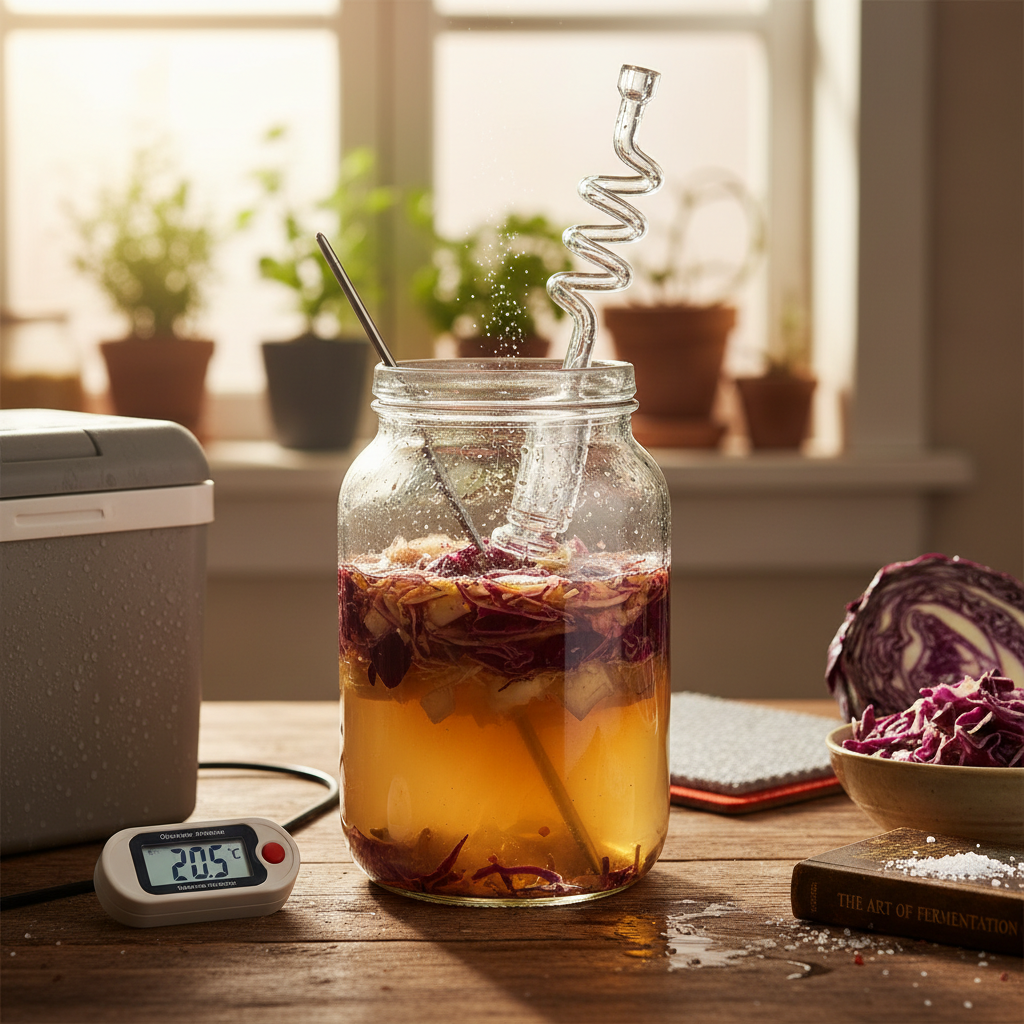
One common approach is the use of dedicated fermentation chambers or insulated vessels. These can range from simple insulated boxes to sophisticated temperature-controlled refrigerators or glycol-jacketed fermenters. Temperature controllers, often paired with heating and cooling elements, allow for precise regulation, ensuring the fermentation stays within its optimal range for the entire duration. For smaller-scale operations, even placing a fermenter in a stable room away from drafts, direct sunlight, or external heat sources can make a significant difference. Regular monitoring with reliable thermometers is also crucial to catch any deviations early.
Conclusion
Temperature is not merely a contributing factor but the conductor of the microbial orchestra during fermentation. Its stability dictates the rhythm, the harmony, and ultimately, the success of the entire process. While slight variations can be tolerated, significant or sudden fluctuations stress the hardworking microorganisms, leading to inconsistent activity, the production of undesirable flavors, stalled fermentation, or even the death of the culture. By understanding and diligently controlling temperature, you empower your yeast and bacteria to perform their best, ensuring delicious, predictable, and high-quality fermented products every time.
What is the single most challenging aspect of maintaining stable fermentation temperatures in your experience?
Frequently Asked Questions
What is the ideal temperature range for most fermentations?
|
Our Picks for the Best Black garlic fermenter in 2026
As an Amazon Associate I earn from qualifying purchases.
|
||
| Num | Product | Action |
|---|---|---|
| 1 | 5L Black Garlic Fermenter Full Automatic Intelligent Control Garlics Maker Multi Clove Garlic Cooker FCC UL Approved |

|
| 2 | 6L Black Garlic Fermenter Multifunctional Intelligent Fermenter Pot 6L Black Garlic, Sweet Rice, Natto,Yogurt Maker Garlic Fermenter Machine DIY Cooker |
|
| 3 | 5L Black Garlic Fermenter, Automatic Garlic Fermenting machine, Wine Fermenting Machine, Yogurt Maker with Temperature Control |
|
| 4 | WantJoin Black Garlic Fermenter 6L - Full Automatic Intelligent Control Black Garlic Maker, 360° Even Fermented,Makes 3-4 LBS Garlic Fermenter Machine, Makes Multi Clove & Whole Clove Garlic |
|
| 5 | Moongiantgo 7.5L Black Garlic Fermenter, Automatic Intelligent Control Garlic Fermenter Natto, Yogurt, Kimchi, Wine Fermenter Machine, Garlic Cooker with Precise Time Temperature Control, 110V (Brown) |
|
| 6 | 110V 6L Black Garlic Fermenter Intelligent Fully Automatic Black Garlic Machine Black Garlics Ferment Pot Garlic Ferment Box Black Garlic Maker DIY Cooker |
|
| 7 | INTBUYING 6L Black Garlic Fermenter,Garlic Ferment,Black Garlics Ferment Pot,Full Automatic Intelligent Control Black Garlics Maker Black Garlic Maker |
|
| 8 | TECHTONGDA 5L Black Garlic Fermenter 110V Garlic Cooker 3D Heating Full Automatic Intelligent Control |
|
| 9 | Moongiantgo 8L Black Garlic Fermenter Garlic Fermenting Machine, Easy One-Button Operation Automatic Intelligent Large Capacity Black Garlic Maker with Precise Time Control for 6-16 Days, 110V (8L) |
|
| 10 | 6L Black Garlic Fermenter,Yogurt Maker with Adjustable Temperature & Time Control,Kimchi machine,Sweet Rice Wine Maker Full Automatic,Natto Maker,FCC UL Listed |
|
The ideal temperature range varies greatly depending on the specific microorganisms and the type of product being made. For example, ale yeasts typically prefer 60-75°F (15-24°C), while lager yeasts prefer cooler temperatures around 45-55°F (7-13°C). Lactic acid bacteria for vegetable fermentation often thrive in a range of 65-75°F (18-24°C). Always refer to the specific recommendations for your chosen culture.
Can fermentation recover from temperature shock?
Sometimes, but it’s not guaranteed, and the quality of the final product may be compromised. If the temperature extreme was not lethal (e.g., not hot enough to kill the microorganisms) and the fluctuation was temporary, returning the ferment to its optimal range may restart activity. However, stressed microorganisms often produce off-flavors, and the fermentation might remain sluggish or incomplete.
What are “off-flavors” caused by temperature?
Off-flavors due to temperature stress can vary widely. High temperatures often lead to the production of harsh fusel alcohols (tasting like paint thinner or rubbing alcohol), excessive fruity esters, or phenolic compounds (clove, plastic, medicinal notes). Low temperatures, while less likely to produce distinct off-flavors, can result in a bland, underdeveloped, or overly sweet product due to incomplete fermentation.
Does cold temperature kill yeast?
Generally, cold temperatures do not kill yeast; instead, they slow down or temporarily halt its activity. Yeast can become dormant in cold conditions and often revive once returned to an optimal temperature range. However, extremely cold temperatures that cause ice crystal formation can rupture cell walls and lead to cell death. For most practical fermentation purposes, refrigeration simply pauses the process.