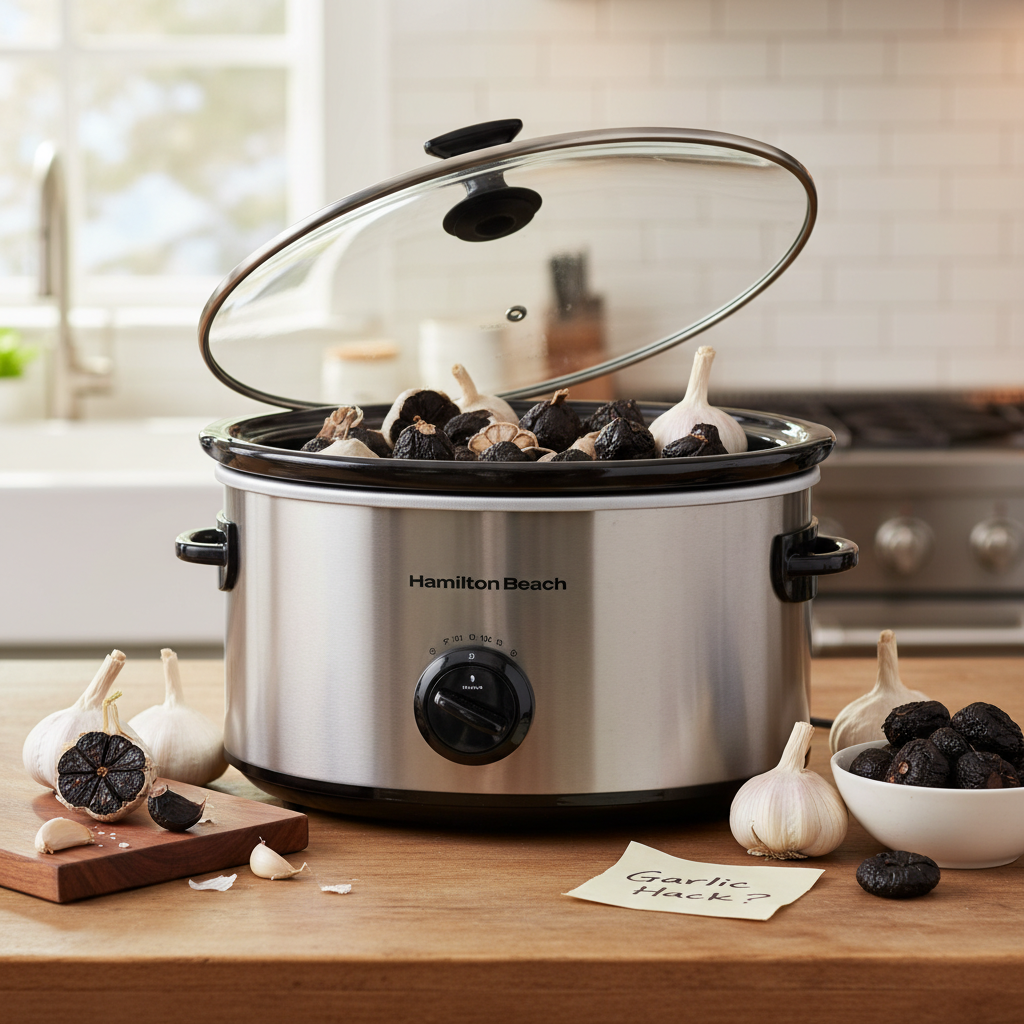
Welcome, fellow food enthusiasts and culinary adventurers! As the Admin of ReviewESL.com, and a technician with over a decade of deep expertise in black garlic fermentation technology, I’ve seen countless methods for crafting this exquisite ingredient. While dedicated fermenters offer precision, many home cooks eye their trusty Hamilton Beach slow cooker as a potential “garlic hack.” But does this everyday appliance truly stand up to the task of transforming pungent white garlic into sweet, umami-rich black gold? Let’s dive into an honest, in-depth review of using your Hamilton Beach slow cooker for this fascinating culinary project.
The Allure of Black Garlic and the Slow Cooker “Hack”
Black garlic isn’t just a trendy ingredient; it’s a culinary marvel created through a meticulous aging process, not fermentation, known as the Maillard reaction. This reaction, occurring under consistent low heat and humidity, transforms the garlic’s sugars and amino acids, resulting in a dark, soft, and jelly-like clove with a distinctly sweet, tangy, and savory flavor profile, often compared to balsamic vinegar or molasses. It loses its harsh pungency and boasts enhanced antioxidant properties.
For many, the appeal of making black garlic at home lies in its cost-effectiveness compared to specialty store prices. This is where the Hamilton Beach slow cooker enters the spotlight. Its accessibility and generally stable low-temperature settings make it an attractive candidate for this long-duration “hack,” offering a way to produce gourmet black garlic without investing in a specialized fermenter. However, success hinges on understanding its unique capabilities and limitations.
Hamilton Beach Slow Cookers: Core Features for Everyday Cooking
Before delving into the “garlic hack,” it’s essential to appreciate the Hamilton Beach slow cooker’s general utility. These appliances are staples in kitchens worldwide, praised for their simplicity, reliability, and ease of use. Models typically range in capacity, from family-friendly 4-quart sizes to larger 6-quart options, making them versatile for various culinary needs.
Key features often include:
- Programmable Settings: Many Hamilton Beach models offer timers (e.g., 2, 4, 6, 8, or 10 hours) and can automatically switch to a “Keep Warm” setting once the cooking cycle is complete. This “set-it-and-forget-it” functionality is a huge plus for busy cooks.
- Temperature Modes: Standard settings are usually High, Low, and Warm, designed for conventional slow cooking recipes.
- Durable Construction: Most come with a removable stoneware crock and a glass lid, often dishwasher-safe, simplifying cleanup after a long cooking session. [5 – search result 1]
- User-Friendly Interface: Hamilton Beach prides itself on intuitive controls, making these slow cookers accessible even for novice cooks.
These attributes contribute to the brand’s popularity for traditional stews, roasts, and chilis, but how do they translate to the specialized demands of black garlic production?
Decoding the “Warm” Setting: The Heart of the Garlic Hack
The critical factor for successful black garlic in a Hamilton Beach slow cooker is its “Warm” setting. This function typically maintains a temperature of approximately 165°F (74°C). This temperature is not merely suitable but actually falls within the scientifically recognized optimal range of 120°F to 190°F (50-88°C) for the Maillard reaction that creates black garlic, with 158°F (70°C) often cited as ideal.
It’s crucial to understand that the “Low” setting, while seemingly a gentle option, often operates at a higher temperature, typically between 180-200°F (82-93°C). Some slow cooker models, particularly older or less consistent ones, can even run as hot as 350°F on their lowest setting. Attempting the black garlic hack on such a high “Low” setting can lead to charred, dried-out garlic and even melted plastic bags, as one unfortunate experiment revealed. Therefore, always prioritize the “Warm” setting for black garlic unless you have verified your slow cooker’s “Low” temperature to be consistently within the safe black garlic range.
For those seeking even greater precision, some advanced Hamilton Beach slow cooker models feature a “probe mode” that allows users to set a specific target temperature. [1, 3, 4, 5 – search result 3] This feature offers a significant advantage, enabling fine-tuned control over the delicate aging process and potentially yielding more consistent results.
Step-by-Step Guide: Making Black Garlic in Your Hamilton Beach Slow Cooker
Embarking on the black garlic hack requires patience, a suitable Hamilton Beach slow cooker, and a few simple steps:
- Select Your Garlic: Start with fresh, whole garlic bulbs. Do not peel or separate the cloves.
- Prepare the Bulbs: Wrap each individual garlic bulb tightly. A common method is to first wrap them in plastic wrap, then encase them in two layers of aluminum foil. This helps retain the crucial moisture needed for the Maillard reaction. Be cautious with plastic wrap if your slow cooker’s “Warm” setting tends to run hot; some users opt for foil only or use parchment paper under the foil.
- Set Up the Slow Cooker: Line the bottom of your Hamilton Beach slow cooker with a few sheets of paper towel or place a wire rack inside to elevate the garlic bulbs. This prevents direct contact with the heating element and promotes more even heat distribution. [4, 6 – browse result 1] Arrange the wrapped garlic bulbs in a single layer, ensuring they don’t touch each other, if possible.
- Engage the “Warm” Setting: Place the lid securely on your slow cooker. Crucially, select the “Warm” setting. Avoid “Low” unless you have specifically calibrated your appliance and confirmed its temperature falls within the optimal range (120-190°F). If your model has a programmable timer that switches to “Warm,” utilize that feature.
- Patience is Key: The black garlic process is a marathon, not a sprint. Expect it to take anywhere from 3 to 5 weeks, or even up to 40 days, depending on your slow cooker’s precise temperature and the garlic’s moisture content. [4, 6 – browse result 1] Check on the garlic around the three-week mark by unwrapping a single bulb to assess its color and texture. If it’s not soft and black, rewrap it and continue for another week, checking periodically.
- Manage the Aroma: Be prepared for a persistent, strong garlic odor that will permeate your home, especially during the initial weeks. To mitigate this, consider placing your slow cooker in a well-ventilated area, such as a garage, a utility room with an open window, or even a covered outdoor space.
“The subtle nuances of homemade black garlic are unparalleled, but the journey demands a precise ‘warm’ embrace from your appliance. Consistency is the unsung hero of this culinary transformation.” – Admin, ReviewESL.com
Maximizing Success and Troubleshooting Common “Hack” Issues
While the Hamilton Beach slow cooker can be a surprisingly effective tool for black garlic, certain practices can enhance your chances of success and help troubleshoot common setbacks:
- Temperature Consistency: The most critical factor is a steady temperature around 165°F (74°C). Avoid opening the lid too frequently, as this releases heat and moisture, disrupting the delicate process.
- Moisture Retention: Tightly wrapping the garlic bulbs in plastic and foil, or just foil, is paramount for maintaining humidity within each bulb. Adding a small amount of water to the slow cooker (outside of the wrapped garlic) can also help maintain overall humidity if your environment is particularly dry.
- Rotation: For large batches, gently rotating the garlic bulbs every few days can help ensure more even heat exposure and consistent results.
- Garlic Not Darkening/Softening: If, after several weeks, your garlic isn’t black or remains firm, the temperature might be too low, or it simply needs more time. Be patient; some batches can take longer.
- Garlic Charring/Drying Out: This is a sign the temperature is too high. Double-check that your slow cooker is firmly on the “Warm” setting, not “Low.” Ensure the garlic is adequately wrapped to prevent moisture loss. If using plastic, consider switching to foil-only if you suspect the internal slow cooker temperature is too high, leading to melting.
- Lingering Odor: Post-black garlic, thoroughly clean your slow cooker’s crock and lid. For persistent odors in your space, ensure good ventilation with open windows and consider using odor absorbers or an air purifier.
Is the Hamilton Beach Slow Cooker the Right Tool for Your Black Garlic Journey?
The Hamilton Beach slow cooker presents a compelling option for those looking to venture into homemade black garlic without significant investment.
Pros:
- Cost-Effective: Utilizes an existing kitchen appliance, saving money on a dedicated fermenter.
- Accessible: Slow cookers are common household items, making the hack widely available.
- Reliable “Warm” Setting: The typical 165°F (74°C) “Warm” setting on many Hamilton Beach models aligns well with the optimal temperature for black garlic.
- Programmable Convenience: Features like auto-switching to “Warm” simplify the long-term process.
Cons:
- Lack of Fine-Tuned Control: Basic models lack the precise temperature control of dedicated fermenters, which can lead to inconsistencies.
- Variability in “Low” Settings: The “Low” setting can be too hot on some models, leading to failure.
- Odor Challenge: The strong, prolonged garlic aroma can be a significant drawback in smaller living spaces.
- Occupied Appliance: Your slow cooker will be tied up for weeks, making it unavailable for other cooking tasks.
Food Safety Advisory: While the “Warm” setting on Hamilton Beach slow cookers generally maintains temperatures above the danger zone, it is crucial to remain vigilant. Food safety expert Dr. Brian Nummer emphasizes that the “fermentation” temperature must be maintained at 57°C (135°F) or above to prevent the growth of harmful bacteria like Clostridium botulinum. He recommends using a temperature data logger for precise monitoring. Always ensure your garlic is consistently held at the appropriate temperature throughout the entire process.
In conclusion, the Hamilton Beach slow cooker can indeed be an effective tool for the black garlic hack, particularly models with a stable “Warm” setting around 165°F. It requires patience, careful monitoring, and a good understanding of your appliance’s actual temperature performance. While dedicated fermenters offer more control and often faster results, the satisfaction of creating black garlic with a household staple is immensely rewarding. Will you embark on this flavorful journey? The sweet, savory depths of homemade black garlic await.
Frequently Asked Questions
How long does it take to make black garlic in a Hamilton Beach slow cooker?
|
Our Picks for the Best Black garlic fermenter in 2026
As an Amazon Associate I earn from qualifying purchases.
|
||
| Num | Product | Action |
|---|---|---|
| 1 | INTBUYING 6L Black Garlic Fermenter,Garlic Ferment,Black Garlics Ferment Pot,Full Automatic Intelligent Control Black Garlics Maker Black Garlic Maker |

|
| 2 | 5L Black Garlic Fermenter, Automatic Garlic Fermenting machine, Wine Fermenting Machine, Yogurt Maker with Temperature Control |
|
| 3 | TECHTONGDA 5L Black Garlic Fermenter 110V Garlic Cooker 3D Heating Full Automatic Intelligent Control |
|
| 4 | Moongiantgo 8L Black Garlic Fermenter Garlic Fermenting Machine, Easy One-Button Operation Automatic Intelligent Large Capacity Black Garlic Maker with Precise Time Control for 6-16 Days, 110V (8L) |
|
| 5 | 110V 6L Black Garlic Fermenter Intelligent Fully Automatic Black Garlic Machine Black Garlics Ferment Pot Garlic Ferment Box Black Garlic Maker DIY Cooker |
|
| 6 | 5L Black Garlic Fermenter Full Automatic Intelligent Control Garlics Maker Multi Clove Garlic Cooker FCC UL Approved |
|
| 7 | Moongiantgo 7.5L Black Garlic Fermenter, Automatic Intelligent Control Garlic Fermenter Natto, Yogurt, Kimchi, Wine Fermenter Machine, Garlic Cooker with Precise Time Temperature Control, 110V (Brown) |
|
| 8 | 6L Black Garlic Fermenter,Yogurt Maker with Adjustable Temperature & Time Control,Kimchi machine,Sweet Rice Wine Maker Full Automatic,Natto Maker,FCC UL Listed |
|
| 9 | 6L Black Garlic Fermenter Multifunctional Intelligent Fermenter Pot 6L Black Garlic, Sweet Rice, Natto,Yogurt Maker Garlic Fermenter Machine DIY Cooker |
|
| 10 | WantJoin Black Garlic Fermenter 6L - Full Automatic Intelligent Control Black Garlic Maker, 360° Even Fermented,Makes 3-4 LBS Garlic Fermenter Machine, Makes Multi Clove & Whole Clove Garlic |
|
The process typically takes 3 to 5 weeks, though some methods can extend up to 40 days or even 9-10 weeks for optimal results. It largely depends on your slow cooker’s consistent temperature and the garlic’s characteristics. [4, 6 – browse result 1]
What is the ideal temperature for making black garlic?
The optimal temperature range for the Maillard reaction that creates black garlic is between 120°F and 190°F (50-88°C), with 158°F (70°C) often considered ideal. The “Warm” setting on most Hamilton Beach slow cookers, typically around 165°F (74°C), falls perfectly within this range. [2, 4 – browse result 1]
Is it safe to make black garlic at home in a slow cooker?
Yes, it can be safe if proper temperature guidelines are followed. The slow cooker must consistently maintain a temperature of 135°F (57°C) or above to prevent the growth of harmful bacteria like Clostridium botulinum. Using the “Warm” setting, which is typically 165°F on Hamilton Beach models, is generally safe. [2, 4 – browse result 1]
Why does my slow cooker black garlic smell so strong?
The intense aroma is a natural part of the black garlic production process. The compounds in garlic release strong odors during the long, low-heat aging, which can permeate your living space for weeks. Using a well-ventilated area like a garage or a separate room is highly recommended.
Can I use any Hamilton Beach slow cooker model for the garlic hack?
While many Hamilton Beach models can work, those with a reliable “Warm” setting around 165°F (74°C) are best. Models with a “probe mode” for precise temperature control offer an advantage. Avoid using the “Low” setting unless you’ve verified its temperature, as some can run too hot and char the garlic.